Cold Chain Logistics 2025: 98% Success for Perishables
By 2025, cold chain logistics will leverage advanced technologies and stringent protocols to achieve a 98% success rate in maintaining the integrity of perishable goods, revolutionizing delivery and consumer trust.
Cold Chain Logistics in 2025: Ensuring Product Integrity for Perishables with 98% Success Rate
The intricate world of supply chains has never been more critical, especially when it comes to temperature-sensitive products. By 2025, the ambition to achieve a cold chain integrity success rate of 98% for perishables is not merely a goal but a rapidly approaching reality, driven by innovation and necessity. This pursuit is transforming how goods move from producer to consumer, ensuring freshness, safety, and efficacy.
The evolving landscape of cold chain technology
The cold chain landscape is undergoing a profound transformation, moving beyond basic refrigeration to embrace sophisticated technological integrations. This evolution is crucial for handling the increasing demand for temperature-sensitive products, ranging from fresh produce and seafood to advanced pharmaceuticals and vaccines. The focus is now on proactive monitoring and predictive analytics to prevent temperature excursions before they occur.
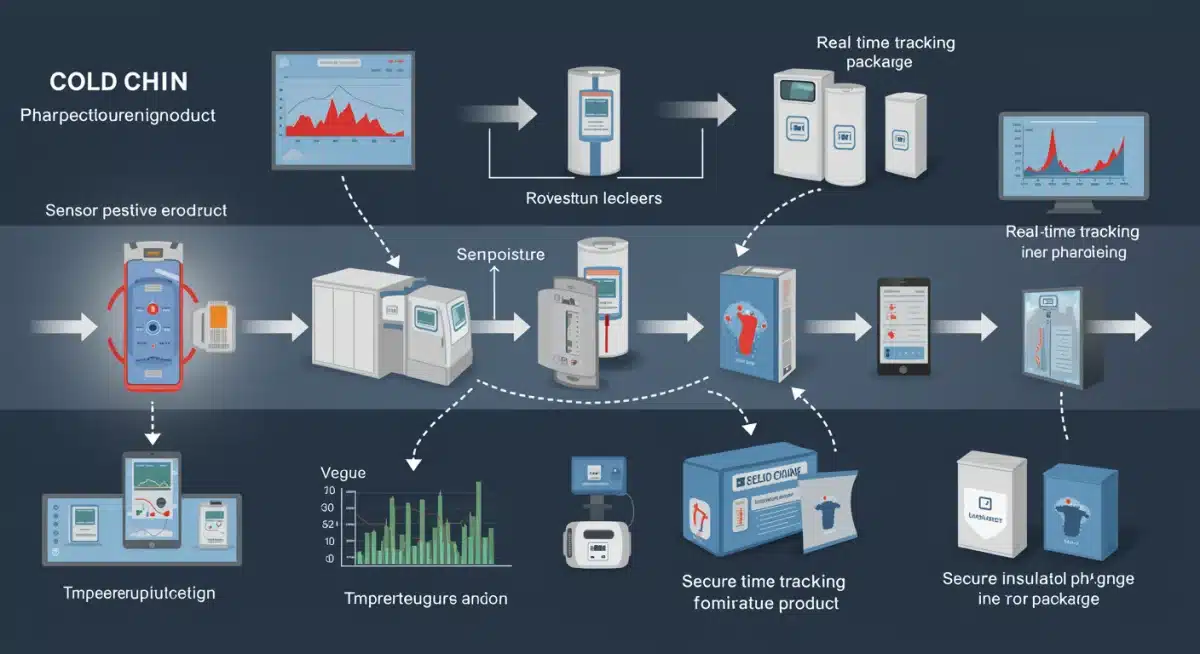
Innovations in sensing technology are at the forefront of this revolution. Miniaturized, low-cost sensors are now ubiquitous, embedded directly into packaging or integrated into transport units. These devices continuously record critical environmental data, such as temperature, humidity, and even light exposure, providing an unparalleled level of transparency throughout the supply chain.
Real-time monitoring and data analytics
Real-time monitoring systems are no longer a luxury but a standard requirement. These systems transmit data wirelessly, allowing logistics managers to track conditions from a centralized dashboard. This immediate access to information enables rapid response to any deviations, minimizing potential losses.
- IoT-enabled sensors: Provide continuous data streams on temperature, humidity, and location.
- Cloud-based platforms: Aggregate and analyze vast amounts of data for actionable insights.
- Predictive analytics: Utilize AI and machine learning to forecast potential risks and optimize routes.
The confluence of these technologies creates a robust framework for maintaining product integrity. By analyzing historical data and current conditions, logistics providers can anticipate challenges, implement preventative measures, and ensure perishable goods arrive in optimal condition. This proactive approach significantly contributes to achieving the ambitious 98% success rate.
Advanced packaging solutions for enhanced protection
Packaging plays a pivotal role in maintaining the integrity of perishable goods within the cold chain. Traditional insulation methods are being replaced by advanced materials and designs that offer superior thermal protection and extended shelf life. These innovations are critical for mitigating risks during transit, especially over long distances or in fluctuating environmental conditions.
The next generation of cold chain packaging incorporates smart features and sustainable materials. Biodegradable insulators, phase-change materials (PCMs), and vacuum insulation panels (VIPs) are becoming standard, offering enhanced thermal stability with a reduced environmental footprint. These solutions are tailored to specific product requirements, ensuring optimal performance.
Smart packaging with integrated indicators
Beyond insulation, smart packaging is emerging as a key differentiator. This includes indicators that provide visual cues about temperature excursions or product freshness. Time-temperature indicators (TTIs) change color irreversibly when exposed to temperatures outside acceptable ranges, offering a clear and immediate assessment of product quality.
- Phase-change materials (PCMs): Maintain specific temperature ranges by absorbing and releasing latent heat.
- Vacuum insulation panels (VIPs): Offer superior thermal resistance with minimal thickness, maximizing cargo space.
- Time-temperature indicators (TTIs): Provide a visual history of temperature exposure, enhancing trust.
These advanced packaging solutions not only protect products but also empower stakeholders with critical information. Consumers gain confidence knowing their perishables have been handled correctly, while logistics providers can pinpoint and address vulnerabilities in their cold chain processes, moving closer to the 98% success target.
The role of automation and robotics in cold chain operations
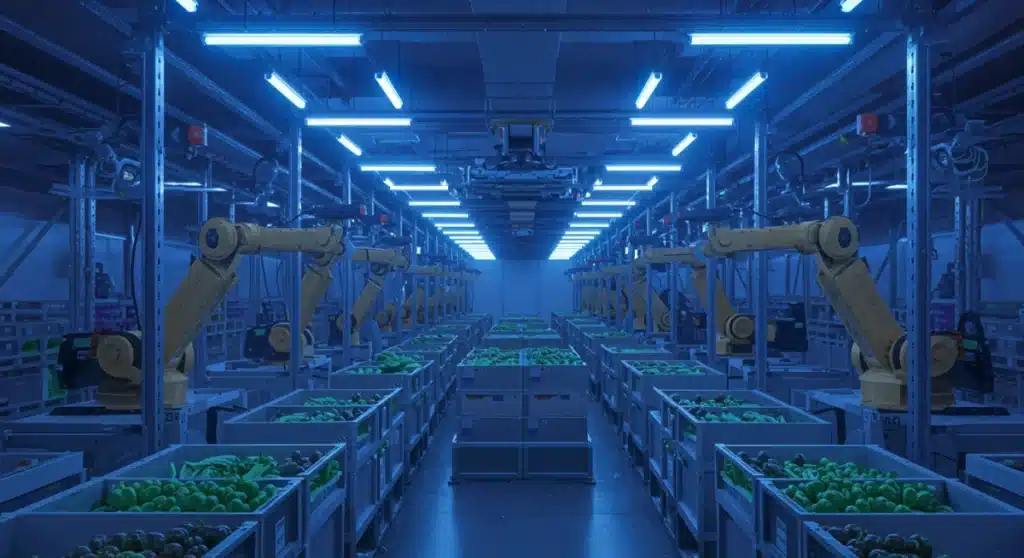
Automation and robotics are revolutionizing cold chain operations, bringing unprecedented levels of efficiency, accuracy, and safety. From automated storage and retrieval systems (AS/RS) in warehouses to robotic palletizing and loading, these technologies minimize human intervention, reducing errors and maintaining consistent temperature control.
In cold storage facilities, robotic systems can navigate frigid environments that are challenging for human workers, performing tasks such as inventory management, order picking, and product movement with speed and precision. This not only improves operational efficiency but also ensures that products spend less time exposed to ambient temperatures.
Automated guided vehicles and drones
Automated Guided Vehicles (AGVs) and Autonomous Mobile Robots (AMRs) are increasingly deployed in cold warehouses, transporting goods between different temperature zones or loading docks. Drones are also finding applications in inventory management, conducting rapid scans of stock levels and identifying misplaced items without needing human entry into cold areas.
- Automated storage and retrieval systems (AS/RS): Optimize space utilization and retrieval times in cold warehouses.
- Robotic palletizing: Ensures consistent and secure stacking of temperature-sensitive goods.
- Automated loading/unloading: Minimizes door opening times, reducing temperature fluctuations.
The integration of automation and robotics significantly streamlines cold chain processes. By reducing manual handling and accelerating throughput, these technologies play a crucial role in maintaining the integrity of perishables, contributing directly to the goal of achieving a 98% success rate in 2025.
Blockchain for transparency and traceability
Transparency and traceability are paramount in cold chain logistics, especially for high-value or highly sensitive products like pharmaceuticals and certain food items. Blockchain technology offers an immutable, distributed ledger that can record every step of a product’s journey, providing an unprecedented level of visibility and trust.
Each transaction or event, from production to delivery, is timestamped and cryptographically linked, creating an unalterable chain of custody. This ensures that all stakeholders—producers, logistics providers, retailers, and even consumers—can access verified information about a product’s history, including temperature logs, handling events, and origin.
Enhanced compliance and fraud prevention
The inherent security and transparency of blockchain make it an ideal tool for regulatory compliance and combating counterfeit goods. Regulators can easily verify adherence to temperature protocols, while consumers can scan QR codes to confirm the authenticity and journey of their purchases. This builds significant trust across the entire supply chain.
- Immutable records: Provides a tamper-proof history of all product movements and conditions.
- Smart contracts: Automate payments and compliance checks based on predefined conditions, like temperature adherence.
- Enhanced auditability: Simplifies regulatory reporting and ensures transparency for all parties involved.
By offering a single source of truth, blockchain technology minimizes disputes, identifies inefficiencies, and strengthens the overall reliability of the cold chain. Its adoption is vital for achieving the ambitious 98% success rate, ensuring that product integrity is not just maintained but also verifiable at every stage.
Sustainable practices in cold chain operations
As the cold chain expands, so does the imperative to adopt sustainable practices. The energy consumption of refrigeration units and refrigerated transport contributes significantly to greenhouse gas emissions. In 2025, the focus is on optimizing energy efficiency, reducing waste, and implementing eco-friendly alternatives without compromising product integrity.
This includes transitioning to more energy-efficient refrigeration systems, utilizing renewable energy sources for cold storage facilities, and optimizing transportation routes to reduce fuel consumption. Companies are also exploring innovative cooling technologies that have a lower environmental impact, such as natural refrigerants and advanced insulation materials.
Waste reduction and circular economy initiatives
Beyond energy, waste reduction is a key aspect of sustainable cold chain operations. This involves minimizing product spoilage through better temperature control and efficient inventory management. Furthermore, there’s a growing emphasis on reusable packaging and implementing circular economy principles to reduce the environmental footprint of logistics.
- Energy-efficient refrigeration: Adopting advanced cooling technologies and smart energy management systems.
- Optimized logistics routes: Utilizing AI to plan the most fuel-efficient delivery paths.
- Reusable packaging solutions: Implementing closed-loop systems for thermal containers and ice packs.
Embracing sustainable practices in the cold chain is not just an environmental responsibility but also a strategic business advantage. It enhances brand reputation, reduces operational costs, and aligns with consumer demand for eco-friendly products and services, contributing to a more resilient and responsible supply chain.
Overcoming challenges and ensuring robust security
Despite technological advancements, the cold chain still faces significant challenges, including infrastructure limitations, regulatory complexities, and the constant threat of security breaches. Ensuring a 98% success rate requires continuous vigilance and proactive strategies to mitigate these risks effectively.
Infrastructure development, particularly in emerging markets, remains a hurdle. Many regions lack the robust cold storage facilities and refrigerated transport networks needed for seamless cold chain operations. Investments in modern infrastructure and public-private partnerships are essential to bridge these gaps and expand reliable cold chain access.
Cybersecurity and regulatory compliance
As cold chain systems become more interconnected and data-driven, cybersecurity becomes a paramount concern. Protecting sensitive data, from patient information in pharmaceutical logistics to proprietary product formulas, is critical. Robust cybersecurity protocols and regular audits are necessary to safeguard against breaches and ensure data integrity.
- Infrastructure investment: Developing state-of-the-art cold storage and transport networks globally.
- Regulatory harmonization: Streamlining international standards for temperature control and product handling.
- Cybersecurity measures: Implementing advanced encryption, access controls, and threat detection systems.
Addressing these challenges requires a multi-faceted approach, combining technological solutions with strong regulatory frameworks and collaborative efforts across the industry. By proactively tackling these issues, the cold chain can move closer to its goal of 98% product integrity, delivering safe and effective perishables to consumers worldwide.
| Key Aspect | Brief Description |
|---|---|
| Real-time Monitoring | IoT sensors and cloud platforms provide continuous data on conditions, enabling swift intervention. |
| Advanced Packaging | Utilizing PCMs, VIPs, and smart indicators for superior thermal protection and quality assurance. |
| Automation & Robotics | Minimizing human error and ensuring consistent temperature control through automated systems. |
| Blockchain Traceability | Creating immutable records for transparency, compliance, and combating counterfeiting. |
Frequently asked questions about cold chain logistics in 2025
The main objective is to achieve a 98% success rate in ensuring product integrity for perishable goods. This ambitious target is driven by technological advancements and the increasing demand for reliable delivery of temperature-sensitive items, ensuring freshness and safety for consumers and patients.
IoT sensors provide continuous, real-time data on critical environmental factors like temperature and humidity. This data is transmitted to cloud-based platforms, allowing for immediate alerts and proactive interventions. This prevents temperature excursions and helps maintain optimal conditions throughout the supply chain.
Blockchain technology creates an immutable, transparent record of every step a product takes in the cold chain. This distributed ledger ensures that all handling events and conditions, including temperature logs, are verifiable and tamper-proof. It significantly boosts trust and aids in regulatory compliance and fraud prevention.
Absolutely. By 2025, there’s a strong emphasis on sustainability, including energy-efficient refrigeration, optimized transportation routes to reduce fuel consumption, and the adoption of reusable and eco-friendly packaging materials. These efforts aim to minimize the environmental footprint of cold chain logistics.
Key challenges include developing robust infrastructure in emerging markets, navigating complex regulatory landscapes, and ensuring strong cybersecurity against data breaches. Addressing these requires ongoing investment, international collaboration, and continuous adaptation to new threats and opportunities.
Conclusion
The ambitious target of achieving a 98% success rate in cold chain integrity for perishable goods by 2025 is a testament to the rapid advancements and strategic investments in the logistics sector. Through the integration of real-time monitoring, advanced packaging, automation, blockchain technology, and sustainable practices, the industry is poised to deliver unprecedented reliability and transparency. While challenges remain, the collective efforts to enhance infrastructure, strengthen security, and streamline regulations are paving the way for a more efficient, trustworthy, and environmentally responsible cold chain, ultimately benefiting consumers and businesses alike.